Foam is a common challenge in many industrial processes. While foam may appear harmless, excessive foam can reduce production efficiency, affect product quality, increase operational costs, and damage processing equipment. Industries such as wastewater treatment, paints, textiles, pulp & paper, detergents, food processing, and chemicals all face foam-related issues.
One of the most effective solutions is a Silicone Defoamer. Known for its fast action, long-lasting performance, and compatibility with a wide range of industrial systems, silicone defoamers are widely used across industries to control unwanted foam.
This guide explains everything you need to know about silicone defoamers, including how they work, their benefits, applications, selection tips, and frequently asked questions.
What is a Silicone Defoamer ?
A Silicone Defoamer (also called a silicone antifoam agent) is a chemical formulation designed to eliminate existing foam and prevent new foam from forming during industrial processes.
Most silicone defoamers are formulated using:
- Polydimethylsiloxane (PDMS)
- Hydrophobic silica
- Emulsifiers
- Water or oil carriers
These ingredients work together to reduce the surface tension of foam bubbles, causing them to collapse quickly.
Unlike many conventional defoamers, silicone-based formulations remain effective even under high temperatures, varying pH levels, and demanding processing conditions.
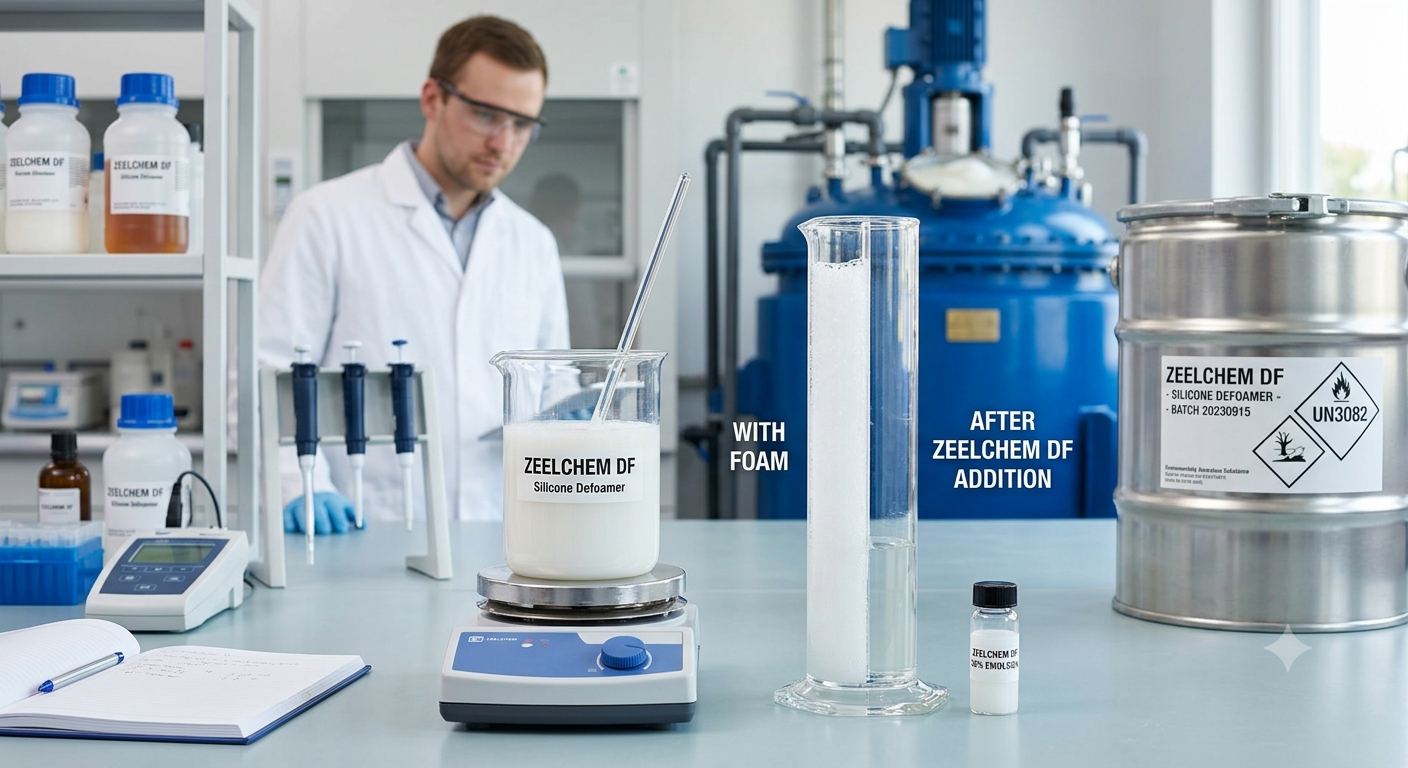
Why is Foam a Problem in Industrial Processes ?
Foam can create several operational challenges, including:
- Reduced production efficiency
- Overflow in tanks
- Pump cavitation
- Inaccurate level measurements
- Lower heat transfer efficiency
- Product contamination
- Longer processing times
- Higher operating costs
Without proper foam control, manufacturers may experience production delays and increased maintenance requirements.


How Does a Silicone Defoamer Work ?
Silicone defoamers act by spreading rapidly across the foam surface.
The process involves:
- The defoamer reaches the foam layer.
- Silicone molecules spread over foam bubbles.
- The bubble walls become unstable.
- Air escapes.
- Foam collapses almost instantly.
Because silicone has an extremely low surface tension, it spreads much faster than water-based systems, making it highly effective at breaking foam.
Key Benefits of Silicone Defoamers
1. Rapid Foam Knockdown
Silicone defoamers destroy foam within seconds, improving production efficiency.
2. Long-Lasting Foam Control
They continue preventing foam generation even after the initial foam has disappeared.
3. Effective at Low Dosage
Only a small quantity is usually required, helping reduce overall chemical consumption.
4. High Temperature Stability
Suitable for processes operating at elevated temperatures.
5. Wide pH Compatibility
Works effectively in acidic, neutral, and alkaline systems.
6. Excellent Chemical Stability
Maintains performance in demanding industrial environments.
7. Cost-Effective
Although premium silicone defoamers may have a higher initial price, their lower dosage requirements and long-lasting performance often reduce the total cost of foam control.
Industrial Applications of Silicone Defoamers
Wastewater Treatment
Foam generated by biological treatment and aeration systems can reduce plant efficiency.
Silicone defoamers help:
- Control aeration foam
- Improve settling
- Prevent overflow
- Protect pumps
Paint & Coatings
Foam causes:
- Pinholes
- Surface defects
- Craters
- Poor finish
Silicone defoamers improve coating quality and production efficiency.
Textile Industry
Used during:
- Dyeing
- Bleaching
- Washing
- Finishing
Benefits include reduced foam during high-speed processing and more consistent results.
Pulp & Paper Industry
Foam affects:
- Paper formation
- Drainage
- Machine speed
Silicone defoamers improve paper quality while reducing downtime.
Detergent Manufacturing
They reduce excessive foam during production without significantly affecting the intended foaming performance of finished products.
Chemical Manufacturing
Chemical reactors often generate unwanted foam during mixing and reactions.
Silicone defoamers help maintain stable processing conditions.
Food Processing
Special food-grade silicone defoamers are used in approved applications such as sugar processing, fermentation, and beverage production, subject to local regulatory requirements.
Silicone Defoamer vs Non-Silicone Defoamer
| Feature | Silicone Defoamer | Non-Silicone Defoamer |
|---|---|---|
| Speed | Very Fast | Moderate |
| Dosage | Low | Higher |
| Temperature Resistance | Excellent | Moderate |
| Chemical Stability | Excellent | Moderate |
| Cost Efficiency | High | Medium |
| Long-Term Performance | Excellent | Moderate |
How to Select the Right Silicone Defoamer
Consider the following factors:
Process Temperature
Choose formulations designed for your operating temperature.
pH Range
Ensure compatibility with acidic, alkaline, or neutral systems.
Industry Requirements
Food, pharmaceutical, wastewater, paint, and textile industries may require different formulations.
Dosage
Most industrial applications require only a small amount, but the optimal dosage depends on the process and should be confirmed through trials.
Compatibility
The defoamer should not interfere with the final product quality.
Best Practices for Using Silicone Defoamers
- Add before excessive foam develops whenever possible.
- Mix uniformly for consistent performance.
- Start with the lowest effective dosage and optimize through testing.
- Store according to the manufacturer's recommendations.
- Conduct plant-scale trials before full implementation.
Common Mistakes to Avoid
- Overdosing the defoamer.
- Using a formulation not designed for the application.
- Ignoring process temperature or pH.
- Adding the product at an ineffective point in the process.
- Failing to evaluate compatibility with the production system.
Frequently Asked Questions
Is a silicone defoamer the same as an antifoam agent?
They are closely related. An antifoam agent primarily prevents foam formation, while a defoamer breaks down existing foam. Many silicone-based products perform both functions.
Is silicone defoamer safe?
Safety depends on the specific formulation and intended application. Always follow the product's Safety Data Sheet (SDS) and applicable regulations.
Can silicone defoamers be used in wastewater treatment?
Yes. They are widely used to control foam in municipal and industrial wastewater treatment processes.
Does silicone defoamer affect product quality?
When correctly selected and dosed, it is designed to control foam without adversely affecting the finished product. Compatibility testing is recommended.
How long does a silicone defoamer remain effective?
Performance varies with the formulation and process conditions, but silicone defoamers are valued for their durable foam-control performance.
Conclusion
Silicone defoamers play an essential role in modern industrial processing by controlling unwanted foam, improving operational efficiency, and supporting consistent product quality. Their fast action, low dosage requirements, and stability under demanding conditions make them a preferred solution across industries including wastewater treatment, paints, textiles, pulp and paper, detergents, chemicals, and selected food-processing applications.
Selecting the right silicone defoamer depends on factors such as process conditions, temperature, pH, and compatibility with your system. Evaluating these factors and conducting application-specific trials can help achieve reliable foam control and optimize production performance.