Silicone Defoamer Application & Dosage
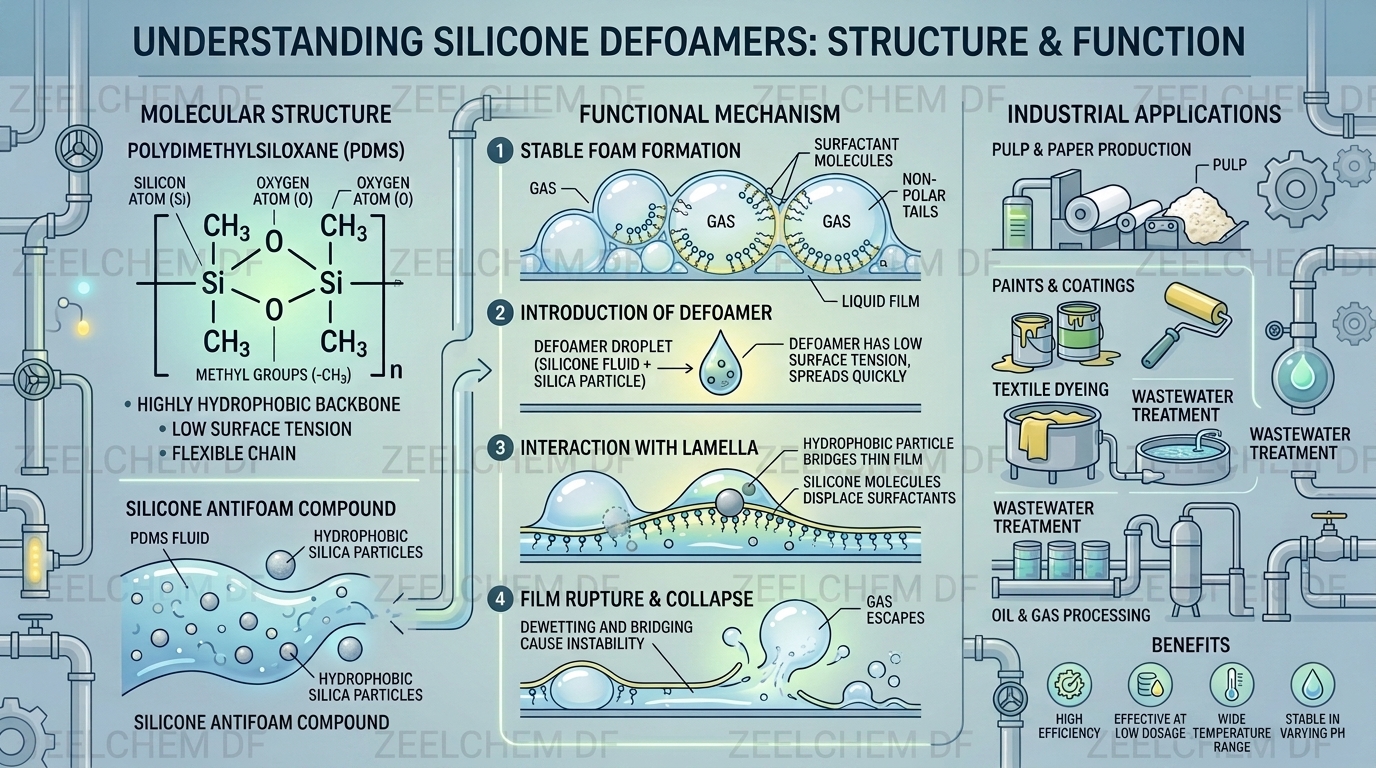
Silicone defoamers (ZEELCHEM DF) are widely used for fast and efficient foam control across many industries:
- Wastewater Treatment – Controls foam in aeration tanks, digesters, and secondary treatment processes.
- Paints, Coatings & Inks – Prevents foam during mixing, grinding, and application; improves surface quality.
- Pulp & Paper – Manages foam in pulping, bleaching, papermaking, and wastewater streams.
- Textiles – Ensures even dyeing, bleaching, and finishing by eliminating foam in process baths.
- Food & Beverage – Food-grade grades control foam in fermentation, boiling, dairy processing, and filling.
- Chemical Processing – Used in reactions, distillation, extraction, and high-temperature processes.
- Oil & Gas – Controls foam in drilling fluids, refining, and gas treatment systems.
- Detergents & Personal Care – Improves formulation stability and process efficiency.
- Agrochemicals & Construction – Powder grades used in pesticides, dry-mix mortars, and cement systems.
In short: Silicone defoamers (ZEELCHEM DF) are preferred wherever strong, long-lasting foam control is needed under demanding conditions (high temperature, extreme pH, or high shear), while delivering performance at very low dosages.
Silicone Defoamer – Dosage Guidelines (Brief)
Typical dosage ranges for silicone defoamers are very low due to their high efficiency:
| Form | Typical Dosage (as product) | Active Content Notes |
|---|---|---|
| Emulsions (10–50% active) | 50 – 500 g per ton of medium (≈ 50–500 ppm) | Most common industrial form |
| Concentrated compounds / fluids | 10 – 100 g per ton (≈ 10–100 ppm) | Higher activity |
| Powder grades | 0.01 – 0.3% by weight of dry mix | Used in cement, detergents, agrochemicals |
Practical Guidelines
- Starting point: Begin with 20–100 ppm active and adjust based on foam severity.
- Severe or continuous foaming: May require up to 200 ppm active or continuous dosing.
- Light / intermittent foam: Often effective at 5–30 ppm active.
- High-temperature or high-shear systems: Slightly higher dosages may be needed for persistence.
- Always optimize: Lab or plant trials are essential. Overdosing can cause surface defects (especially in coatings) or unnecessary cost.
- Dosing method: Prefer continuous or multi-point addition for best results. Pre-dilute emulsions with water if required for better dispersion.
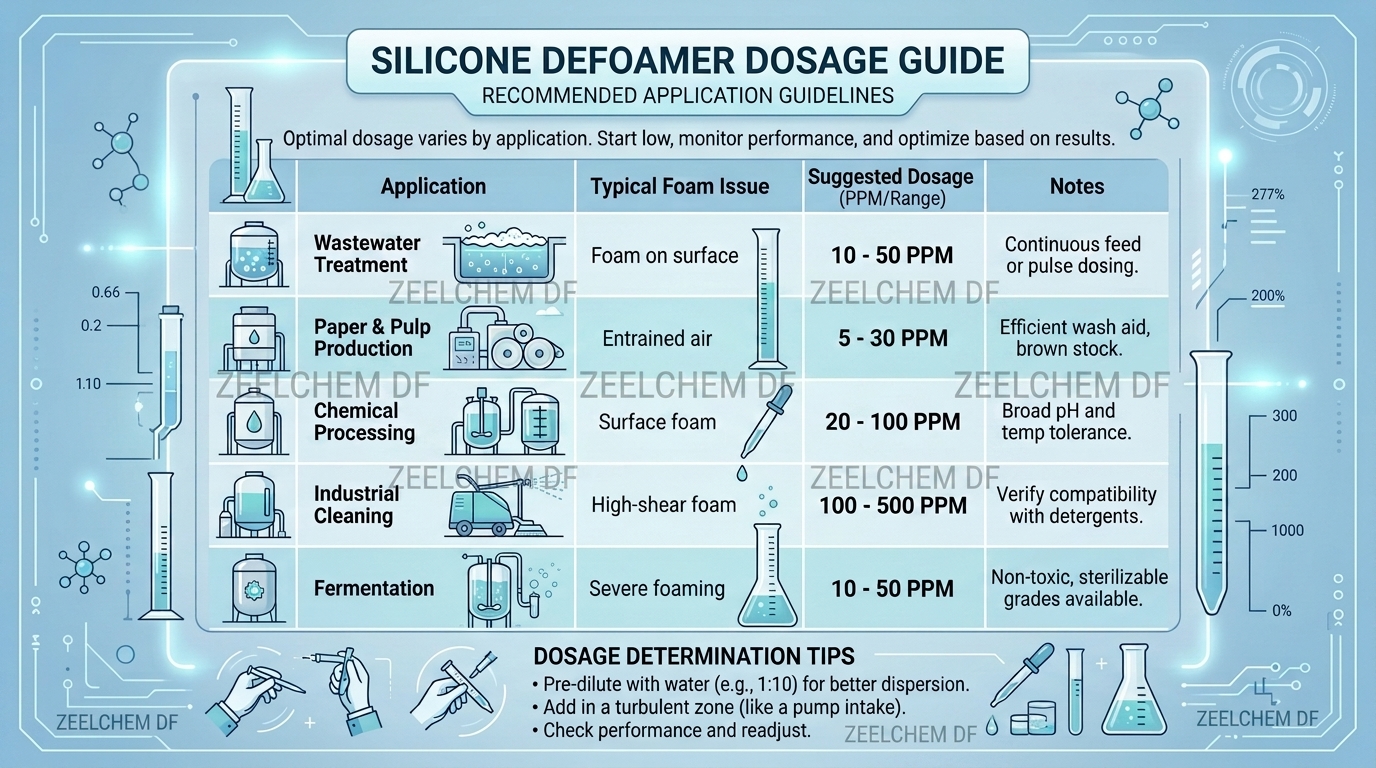
Note: Exact dosage depends on the specific grade, process conditions (pH, temperature, shear, surfactant load), and foam type. Always follow the supplier’s technical data sheet and conduct compatibility tests.