



Skip to Content

Non Silicone Defoamer for Industrial Foam Control

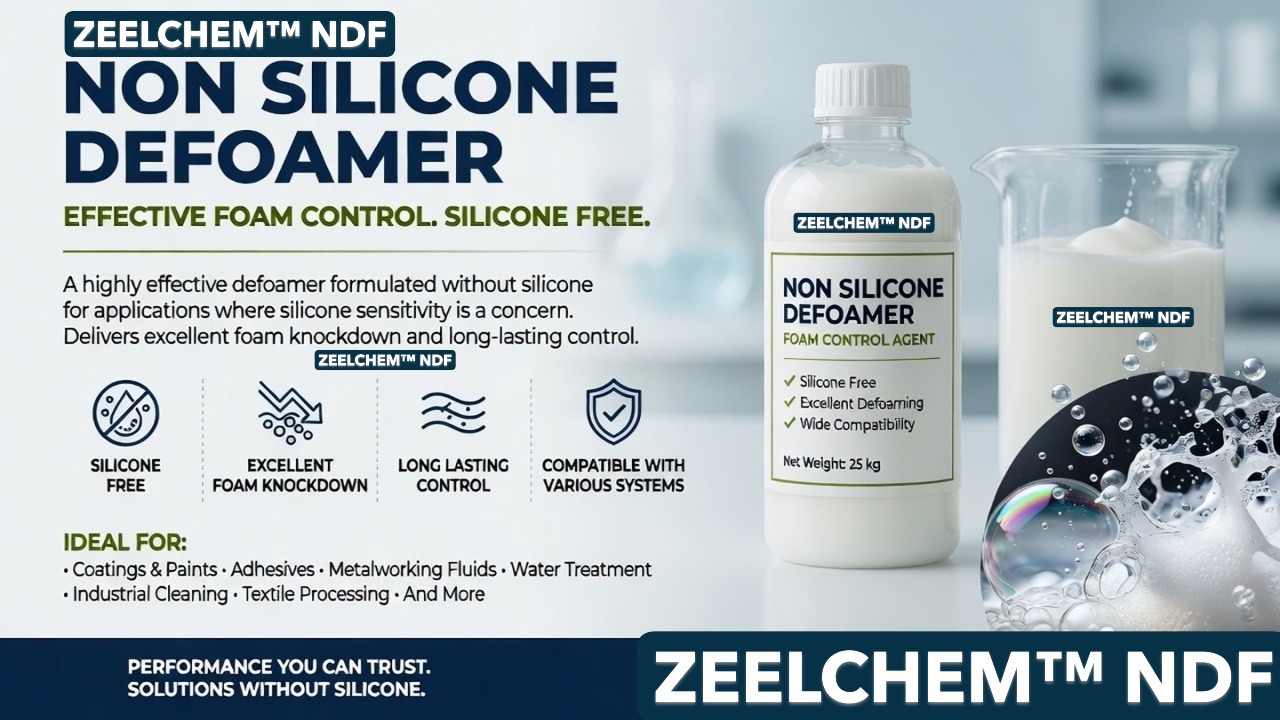
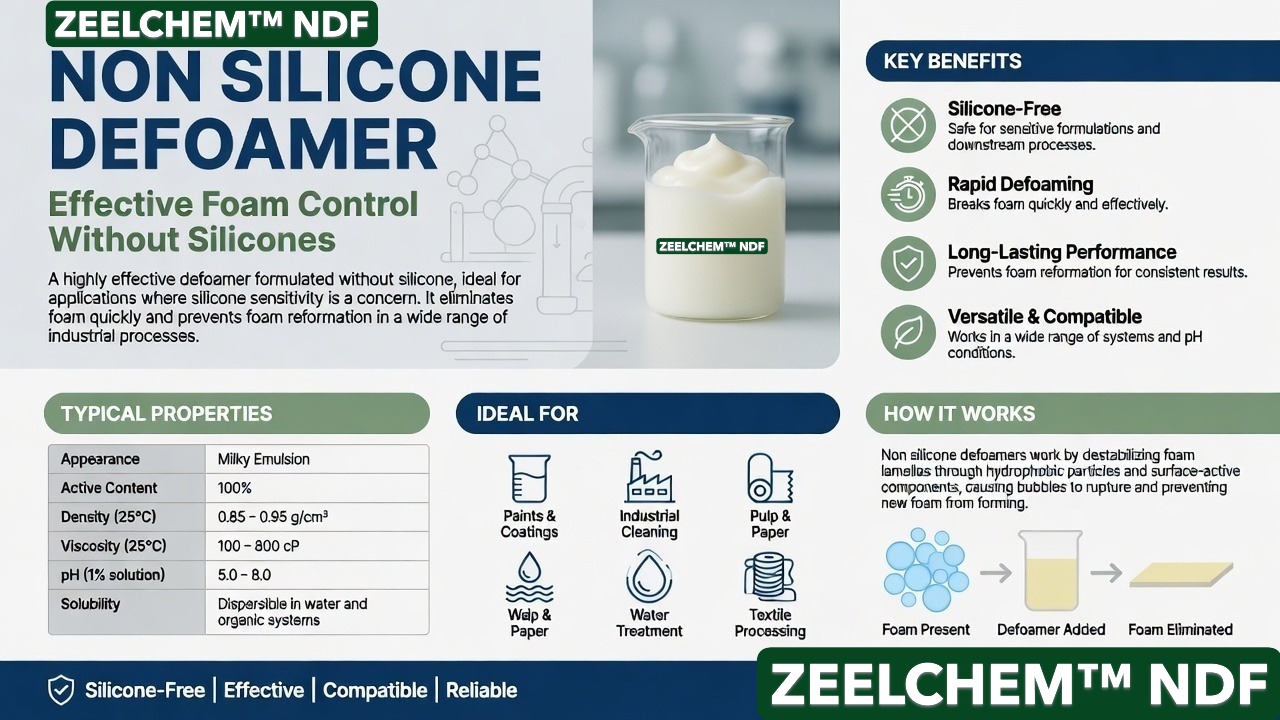
Non Silicone Defoamer is a silicone-free antifoam agent designed to control and prevent foam formation in industrial processes. It delivers fast foam knockdown, long-lasting foam suppression, and excellent compatibility in water-based systems where silicone contamination must be avoided.

Download:

  • Technical Datasheet (TDS)
  • Material Safety Datasheet ( non silicone defoamer MSDS)
  • Certificate of Analysis (COA)

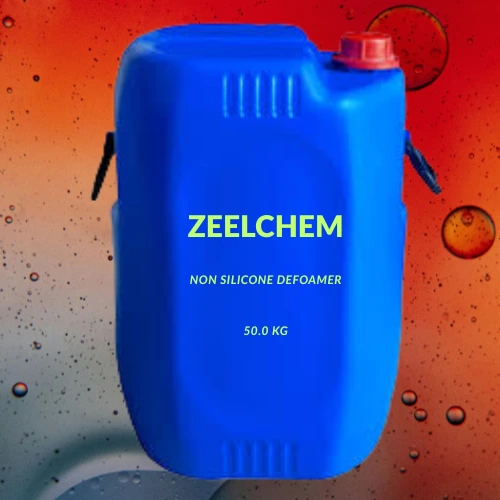
Price 60 Rs / Kg  (3000 Rs/ 50.0 Kg Carboy)

₹ 3,000.00 ₹ 3,000.00

  • Packing Size
Terms and Conditions
30-day money-back guarantee
Shipping: 2-3 Business Days
Packing Size: 50.0 Kgs

What Is Non Silicone Defoamer?

Non Silicone Defoamer is a foam control additive that reduces or prevents unwanted foam without using silicone-based compounds. It is commonly used in water treatment, textile processing, paints, coatings, paper manufacturing, detergents, and other industrial applications.
Key Benefits of Non Silicone Defoamer

  • Silicone-free formulation suitable for processes where silicone residue is not preferred
  • Rapid foam knockdown in aqueous and industrial systems
  • Long-lasting foam control during processing, mixing, washing, or circulation
  • Good dispersibility in water-based formulations
  • Low dosage requirement depending on process conditions
  • Compatible with many industrial systems such as textiles, paints, coatings, wastewater, and paper
  • Helps improve process efficiency by reducing overflow, air entrapment, and production interruptions

Product Details :

Parameter

Typical Details

Product Name

Non Silicone Defoamersilicone free defoamernon silicone antifoam agent

Product Type

Silicone-free antifoam / defoaming agent

Appearance

Milky white to off-white liquid

Base Chemistry

Non-silicone organic defoaming compound

Solubility / Dispersibility

Dispersible in water

Application System

Water-based industrial systems

Recommended Dosage

0.05% to 0.5%, depending on foam level and process conditions

Packaging

50 kg, 200 kg HDPE drums, or as required

Storage

Store in a cool, dry place away from direct sunlight

Shelf Life

Typically 18–24 months when stored properly

Applications of Non Silicone Defoamer

  • Water Treatment

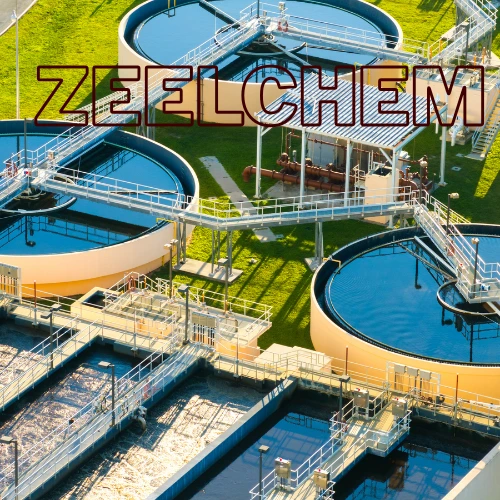
Non Silicone Defoamer is used in effluent treatment plants, wastewater systems, aeration tanks, and process water circuits to reduce foam formation and improve operational stability.

  • Textile Processing

It helps control foam during dyeing, washing, scouring, printing, and finishing operations without adding silicone-based residues.

  • Paints and Coatings

In water-based paints, coatings, emulsions, and pigment dispersions, industrial defoamer helps reduce foam during manufacturing, mixing, filling, and application.

  • Paper and Pulp Industry

It supports foam control in pulp washing, paper coating, stock preparation, and other aqueous paper manufacturing processes.

  • Detergents and Cleaning Chemicals

Non Silicone Defoamer is used in cleaning formulations where controlled foam or low foam performance is required.

  • Adhesives and Emulsions

It helps minimize air entrapment and foam in adhesive, latex, polymer emulsion, and resin-based systems.

How Non Silicone Defoamer Works 

Non Silicone Defoamer works by destabilizing foam bubbles and reducing surface foam formation. When added to a foaming system, it spreads across the foam film, weakens the bubble wall, and helps trapped air escape from the liquid phase.

Non Silicone Defoamer breaks foam by weakening the foam film and allowing trapped air bubbles to collapse. This helps reduce overflow, air pockets, and process interruptions in industrial systems.

Recommended Dosage and Usage

The recommended dosage of Non Silicone Defoamer depends on foam intensity, process temperature, pH, agitation, and formulation type.

General dosage range:

0.05% to 0.5%

Usage Instructions:

Add the defoamer directly to the foaming system or pre-dilute with water if required. For best results, conduct a small trial to determine the optimum dosage before bulk use.

Why Choose Our Non Silicone Based Defoamer?

  • Consistent foam control performance
  • Silicone-free chemistry
  • Suitable for multiple industrial applications
  • Easy to dose and disperse
  • Available in bulk packaging
  • Technical support available
  • Custom grade development available for specific applications
  • Safety, Storage, and Handling

  • Store Non Silicone Defoamer in tightly closed containers in a cool and dry area. Avoid direct sunlight and extreme temperatures. Use appropriate personal protective equipment while handling. Refer to the product Safety Data Sheet before use.

Difference Between Silicone & Non Silicone Defoamer:

  • Main difference

  • Silicone defoamer contains silicone-based active material, usually silicone oil / polysiloxane. Non-silicone defoamer uses organic oils, fatty acids, mineral oils, polyethers, waxes, hydrophobic silica, surfactants, or other non-silicone chemistry. The chemistry changes how strongly it breaks foam, how compatible it is, and what side effects it may cause.

Point

Silicone defoamer

Non-silicone defoamer

Foam breaking power

Usually stronger and faster

Moderate to strong, but often less powerful

Dosage

Lower dosage normally required

Higher dosage may be needed

Heat / chemical resistance

Generally better in harsh systems

Depends on formulation

Compatibility

Can cause surface defects in some systems

Often better compatibility in coatings, paints, printing, adhesives

Surface issues

May cause craters, fisheyes, poor adhesion, spotting if incompatible

Lower risk of silicone-related defects

Residue / contamination

Silicone contamination can be a serious issue in paint, coating, electronics, textile finishing

Preferred where silicone contamination must be avoided

Cost

Often higher per kg, but effective at low dosage

Often lower per kg, but may need more dosage

Typical use

Wastewater, fermentation, pulp, chemicals, detergents, high-foam processes

Paints, coatings, adhesives, inks, textiles, metalworking, systems sensitive to silicone

When to use silicone defoamer

Choose silicone defoamer when you need fast, powerful foam knockdown, especially in high-foam, high-temperature, or chemically aggressive systems. It is widely used because silicone has very low surface tension, so it spreads quickly over foam films and breaks them efficiently.

Common applications:

wastewater treatment, paper pulp, detergents, fermentation, agrochemicals, chemical processing, textile wet processing.

When to use non-silicone defoamer

Choose non-silicone defoamer - foam control chemical when surface finish, coating quality, recoatability, paintability, printability, or adhesion is important. Non-silicone defoamers are often preferred where silicone may cause deposition, spotting, craters, fisheyes, or other surface defects.

Common applications:

paints, coatings, inks, adhesives, paper coating, textile finishing, metalworking fluids, electronics cleaning, food-contact-sensitive formulations.

Simple selection rule

Use silicone defoamer when your priority is maximum foam control.

Use non-silicone defoamer when your priority is compatibility, clean surface finish, or avoiding silicone contamination.

In practice, the best choice depends on your system’s pH, temperature, solvent/water base, surfactants, process stage, and final product requirements. Always test at low dosage first, because too much defoamer can itself cause defects.

Frequently asked questions

Here are some common questions about Non Silicone Defoamer.

Non Silicone Defoamer is used to control foam in industrial processes such as water treatment, textile processing, paints, coatings, detergents, paper manufacturing, adhesives, and emulsions.

Yes. Non Silicone Defoamer is formulated without silicone-based compounds, making it suitable for applications where silicone contamination or residue is not preferred.

The typical dosage is 0.05% to 0.5%, depending on the foam level, process type, temperature, and system chemistry.

Yes. It is commonly used in wastewater treatment, effluent treatment plants, process water systems, and aeration tanks to reduce foam.

Yes. It can be used in water-based paints, coatings, pigment dispersions, emulsions, and related formulations to minimize foam during manufacturing and application.

Store it in a sealed container in a cool, dry place away from direct sunlight and extreme temperatures.

Related Products:

  • Product: Non Silicone Defoamer
  • Category: Industrial Defoamer / Antifoam Agent
  • Main Feature: Silicone-free foam control
  • Used In: Water treatment, textiles, paints, coatings, paper, detergents, adhesives
  • Buyer Type: Industrial manufacturers, chemical distributors, process industries
  • Main Benefit: Fast and effective foam reduction without silicone-based residue
  • Product Facts

    • Non Silicone Defoamer is a silicone-free antifoam agent.
    • It is used in water-based industrial systems.
    • It helps reduce foam, air entrapment, overflow, and processing delays.
    • It is suitable for water treatment, textile, paint, coating, paper, detergent, and adhesive applications.
    • Typical dosage range is 0.05% to 0.5%, depending on process conditions.
    • It should be stored in a cool, dry place in sealed containers.