Polymer water treatment involves using water-soluble polymers, commonly known as polymeric flocculants or polyelectrolytes, as chemical agents in the treatment of water and wastewater. These handy polymers work by helping to clump together suspended solids, colloids, organic matter, and various impurities in the water, forming larger particles that can be removed more easily.
How It Works
Polymers are made up of long chains of repeating units called monomers. In treatment systems, they usually function through two main mechanisms, often used alongside traditional inorganic coagulants like aluminum or iron salts:
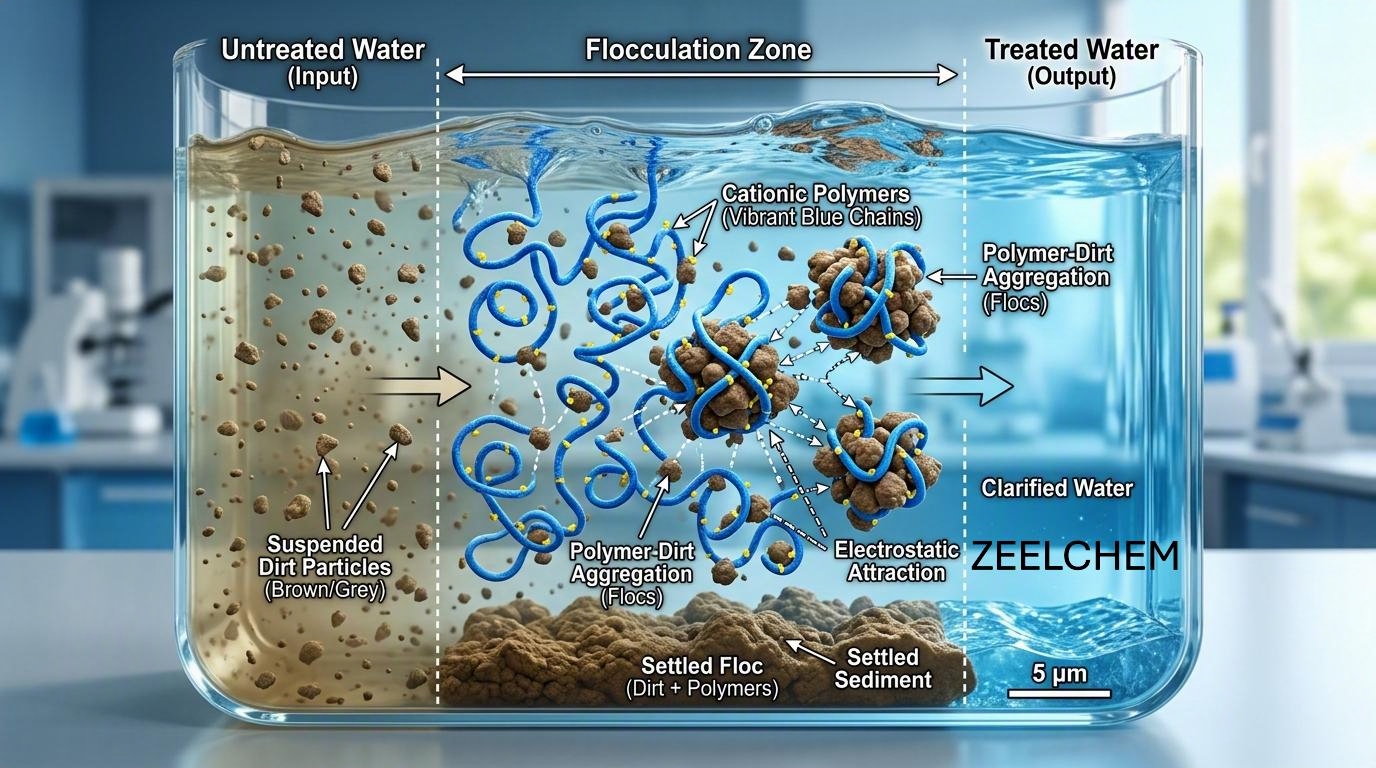
1. Charge neutralization (coagulation aid): Many suspended particles in water have a negative surface charge that keeps them apart. Cationic (positively charged) polymers help neutralize this charge, allowing the particles to come together more closely.
2. Bridging (flocculation): High-molecular-weight polymer chains attach to multiple particle surfaces at once, linking them into larger, denser aggregates known as flocs. These flocs can settle by gravity (sedimentation), float, or be captured by filtration or dewatering equipment much more efficiently than individual fine particles.
This process is commonly used in the clarification, sludge thickening, or dewatering stages of municipal drinking water plants, industrial effluent treatment (like mining, paper, textile, and food processing), and sewage treatment.
Types of Polymers Used In Water Treatment
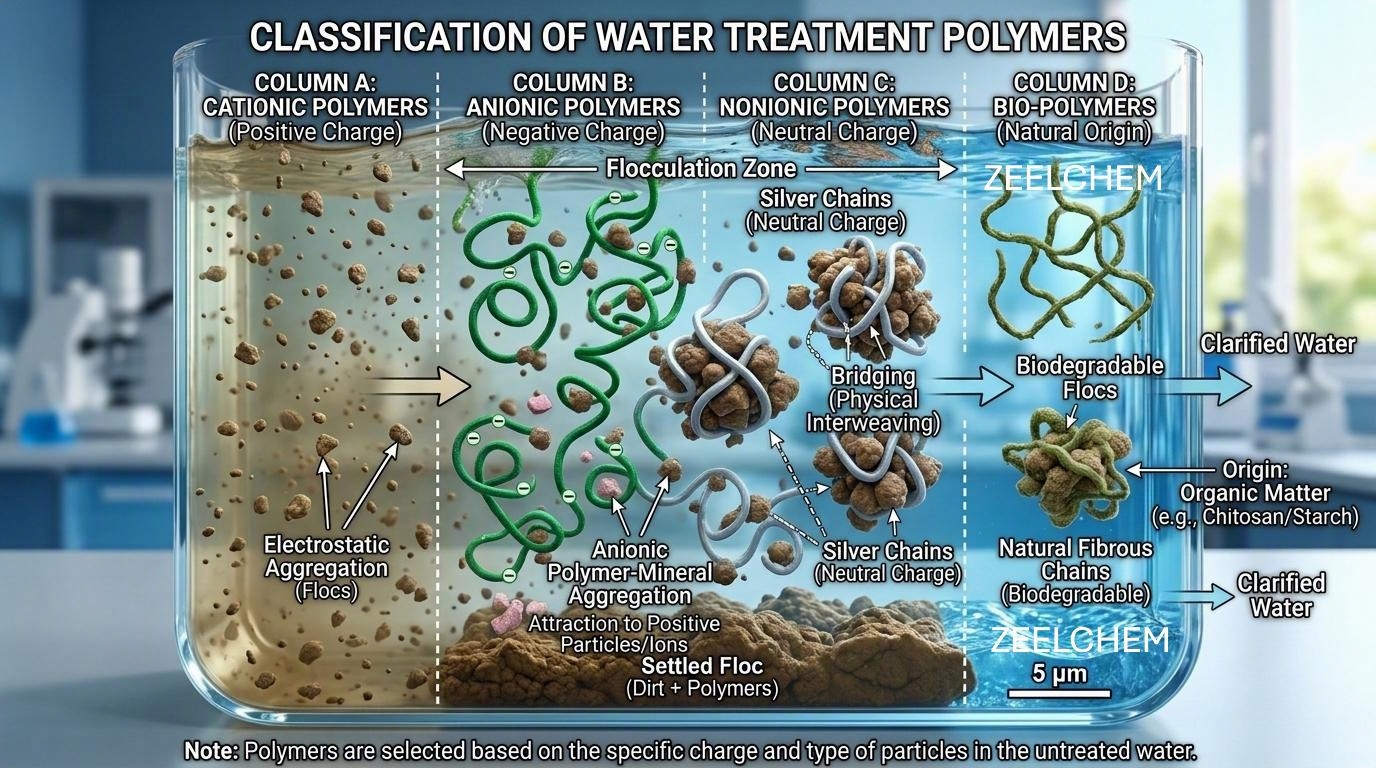
Polymers are classified mainly by ionic charge and origin:
| Type | Charge | Common Examples | Typical Uses |
|---|---|---|---|
| Cationic | Positive | Polyacrylamides (cationic), polyDADMAC, polyamines | Sludge dewatering, biological effluent, high-organic waste |
| Anionic | Negative | Anionic polyacrylamides | Mining, paper mills, municipal wastewater (often after a cationic coagulant) |
| Non-ionic | Neutral | Non-ionic polyacrylamides, polyethylene oxide | Specific suspended solids or as retention aids |
| Natural/biopolymer | Varies | Starch, chitosan, alginate, guar gum | Eco-friendlier options; sometimes lower efficiency or higher dose needed |
| Amphoteric | Both + and – | Mixed-charge polymers | Variable-charge waters |
Here are some great benefits to consider:
- You’ll use lower doses of chemicals and generate less sludge compared to using just inorganic coagulants.
- The floc strength is enhanced, leading to better settling rates and clearer treated water.
- There’s a noticeable reduction in residual metals, like aluminum, and a lower ionic load in the water.
- You can save on costs and energy in downstream processes, plus it performs better in cold or colored/soft waters.
- It can be customized to target specific contaminants effectively.
limitations and considerations:
- overdosing can actually help stabilize particles or make the mixture thicker.
- While synthetic polymers are typically not biodegradable (though there are regulations on residual monomer levels), there are natural alternatives available, even if they might not be as effective. To achieve the best results,
- it’s crucial to have the right dosing systems, proper mixing, and thorough jar testing in place.
- Polymer applications in water treatment extend beyond just flocculation and coagulation; they also include membranes, hydrogels for adsorption, scale inhibitors, and innovative oxidative polymerization methods for tackling organic pollutants. However, at its core, “polymer water treatment” primarily focuses on improving the separation of solids from liquids in modern water purification and wastewater management.