A silicone defoamer, sometimes referred to as a silicone antifoam agent, is a unique chemical additive made mainly from silicone compounds—usually polydimethylsiloxane (PDMS, or silicone oil)—mixed with hydrophobic particles like treated silica. This combination works wonders in quickly reducing or preventing foam in liquids. While defoamers tackle existing foam, antifoamers are designed to stop new foam from forming; these terms are often used interchangeably. What sets silicone defoamers apart is their remarkable efficiency at very low concentrations (typically between 10 and 100 ppm), along with their chemical inertness, thermal stability, and effectiveness across a broad range of pH levels and temperatures.
Silicone Defoamer Composition:
Core ingredients typically include:
- Silicone oil (polysiloxane/PDMS): This is the star player, making up about 5–30% in emulsions. It has a silicon-oxygen backbone adorned with methyl side groups, which results in an impressively low surface tension of around 20–21 mN/m—much lower than water’s 72 mN/m.
- Hydrophobic particles (like fumed silica, with a particle size of about 10–30 nm): These little guys boost performance by helping to “puncture” bubble films.
- Emulsifiers, carriers (which can be water or oils), and occasionally modified silicones (such as polyether-, hydroxy-, or amino-modified) are included to improve compatibility.
You can typically find these ingredients in:
- Water-based emulsions (which are super easy to mix into aqueous systems).
- 100% active compounds or oils (ideal for non-aqueous or high-demand applications).
- Powders or solutions.
How it works:
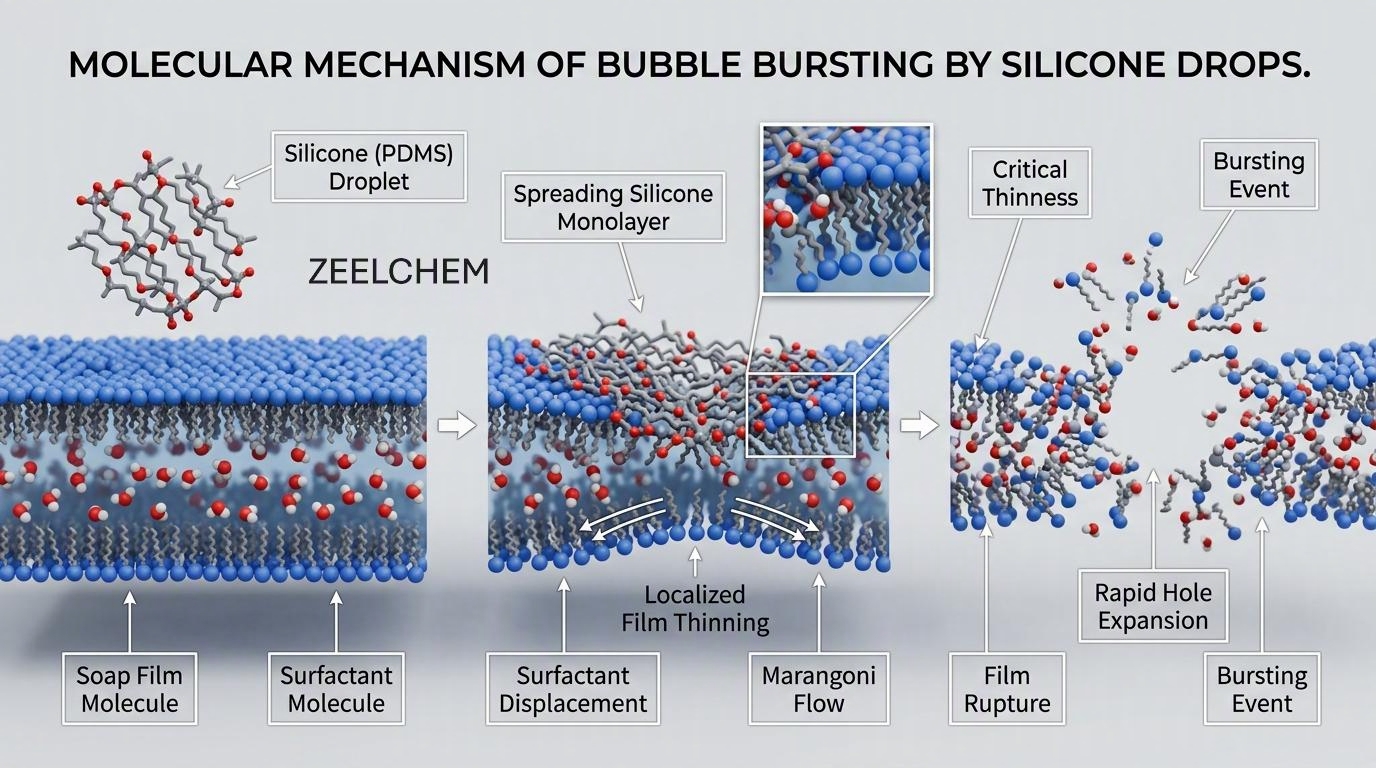
Foam is made up of air bubbles that are held together by surfactants within a liquid film. When you introduce a silicone defoamer, a few things happen:
- First, the low-surface-tension silicone oil quickly spreads over the surface of the bubbles.
- Then, hydrophobic particles come into play, breaking down the film’s structure and speeding up the drainage of the liquid.
- As a result, the bubbles become unstable, merge together, and eventually collapse. Any leftover silicone continues to prevent new foam from forming.
It’s worth noting that pure silicone oil on its own isn’t as effective; combining it with emulsifiers or silica is crucial for achieving quick spreading and action.
Key Advantages
- You only need a tiny amount compared to mineral oil or organic options.
- It boasts impressive heat resistance, often holding up well above 130–150 °C, and sometimes even higher with modified versions.
- It performs well in both water-based and non-water-based systems, even under high shear, extreme pH levels, or intense heat.
- Plus, it provides long-lasting foam control, combining quick knockdown with lasting persistence.
- Generally, it has low toxicity, making it suitable for a variety of regulated applications, including some food-grade options.
Common Applications
Silicone defoamers find their way into a variety of industries, including:
- Pulp and paper production - Paints, coatings, inks, and adhesives
- Wastewater treatment and chemical processing
- Textiles, detergents, and fermentation (like food and beverages or pharmaceuticals)
- Oil and gas (covering drilling, refining, and crude oil)
- Construction chemicals and agrochemicals
They play a crucial role in keeping processes running smoothly, enhancing separation and filtration, safeguarding equipment capacity, and boosting product quality by managing unwanted foam. To put it simply, a silicone defoamer is a top-notch, low-dose foam-control solution rooted in silicone chemistry that effectively breaks down and prevents foam in a variety of industrial applications.